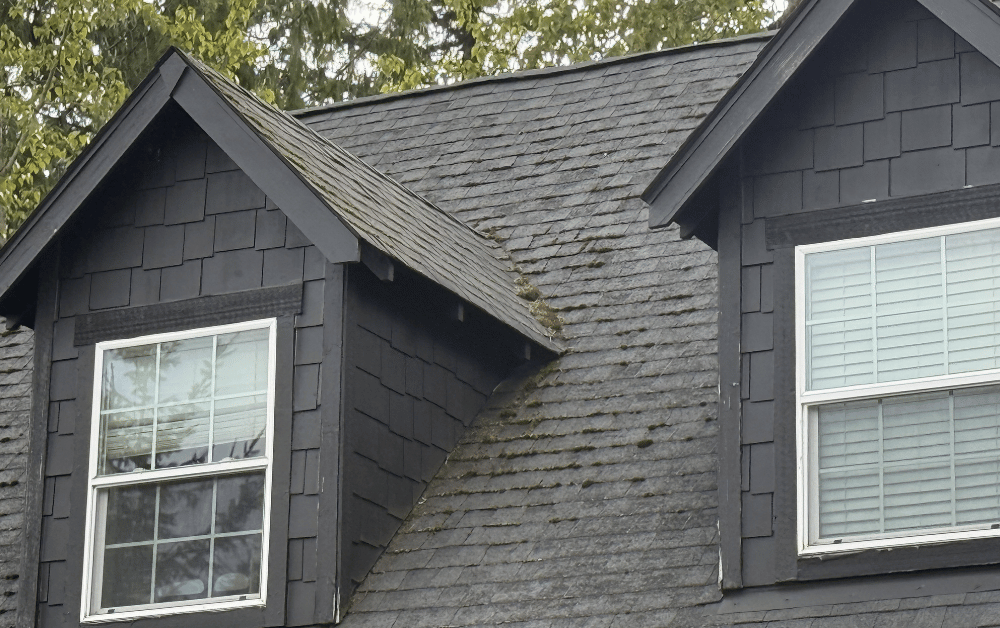
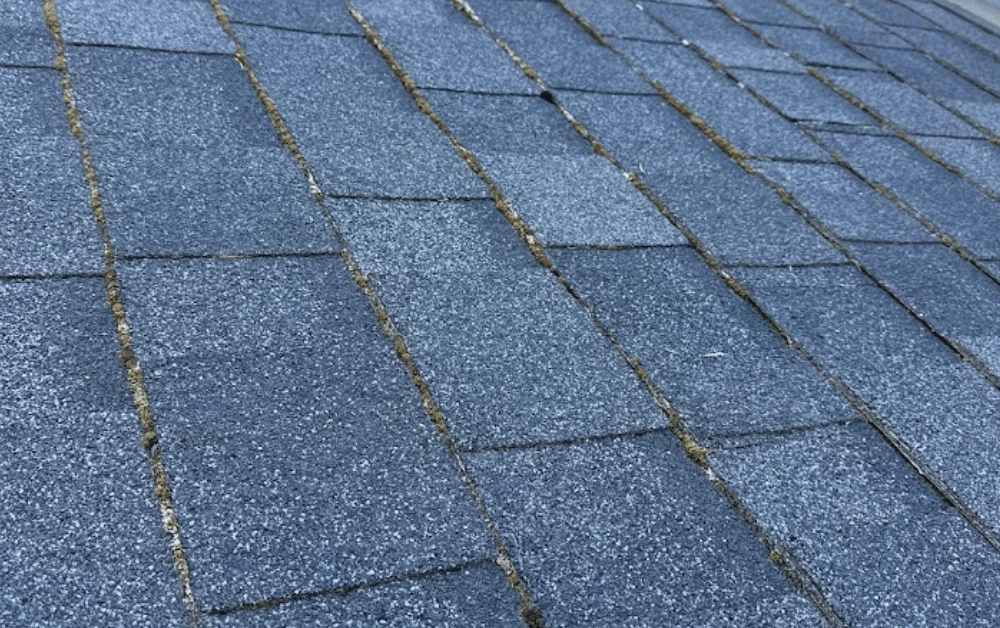
A pressure washer is a pressure washer. The trigger works the same in Arizona as it does in Hillsboro. But the surfaces, the buildup, the materials, and the risks are completely different. What works on sun-baked concrete in a dry climate can destroy a mossy roof, saturated siding, or biologically colonized walkway in western Oregon.
Our climate creates a specific and relentless set of exterior cleaning problems that most of the country never deals with. Moss on roofs, algae embedded in siding, lichen bonded to concrete, mildew in every shaded crevice, and a wet season that lasts long enough for all of it to establish deeply before anyone thinks about cleaning. Addressing these conditions requires more than equipment. It requires knowing what grows here, what it does to different materials, and which cleaning methods protect those materials rather than accelerating their deterioration.
This article explains why climate-specific experience matters more than equipment specifications when hiring an exterior cleaning company in Oregon.
What Makes Oregon Different
Every region has weather. Oregon's west side has a specific combination of conditions that makes exterior cleaning a different discipline than it is in most other parts of the country.
Duration of the wet season. According to climate data from the National Weather Service Portland office, the Portland metro area receives the majority of its annual rainfall between October and May. That is seven to eight months of consistent moisture on every exterior surface. Biological growth does not just appear during this window. It establishes, spreads, and embeds itself into surface pores over a period long enough to become structurally integrated with the material it is growing on.
Temperature range. Oregon's winters are mild enough that biological growth remains active through most of the wet season. Moss, algae, and mildew do not freeze and die the way they do in colder climates. They grow slowly but continuously through the winter, which means the accumulation between cleaning cycles is significant.
Tree canopy. The Willamette Valley and west Portland metro are heavily forested compared to most suburban areas. Mature Douglas firs, western red cedars, big leaf maples, and Oregon white oaks drop needles, leaves, seeds, and sap onto roofs and gutters year-round. This organic debris feeds biological growth and traps moisture against surfaces.
Shade patterns. Dense tree cover combined with lower sun angles through much of the year means many roof sections, walkways, and building elevations receive very little direct sunlight. These surfaces stay damp for days or weeks at a time, which is the primary condition moss and algae need to thrive.
Soil and runoff. Oregon's clay-heavy soils shed water rather than absorbing it, which means splash-back onto siding and foundation walls is more severe than in sandier soils. Rainwater carries mud, mineral deposits, and organic matter onto surfaces that would stay cleaner in better-draining soil conditions.
Why Generic Cleaning Approaches Fail Here
A contractor who learned exterior cleaning in a drier climate and brings that approach to Oregon will make predictable mistakes:
Relying on pressure alone. In a dry climate, most exterior buildup is mineral, dust, or surface grime that responds to water force. In Oregon, the primary buildup is biological. Pressure disrupts the surface layer of algae and moss but leaves root structures intact. The growth returns faster than it originally established because competing organisms have been cleared away. Without pre-treatment chemistry that kills biological growth at the cellular level, pressure-only cleaning is a temporary cosmetic fix.
Using too much pressure on the wrong surfaces. A contractor accustomed to cleaning dry, hard surfaces may default to higher pressure settings on materials that cannot tolerate them. Oregon siding is often damp, paint is softer when wet, wood grain is raised by moisture, and shingles are more vulnerable when the substrate beneath them is saturated. What a roof or siding can tolerate on a dry day in July is different from what it can tolerate on a damp day in March, and most Oregon cleaning happens somewhere between those extremes.
Underestimating biological growth. A contractor from a drier region may see green on a surface and treat it as a stain rather than a living organism. The distinction matters because stains respond to cleaning. Living organisms respond to treatment. Removing the visible layer without addressing the biology underneath is why so many Oregon homeowners report that their surfaces "got dirty again in a few months."
Ignoring moisture behind surfaces. Oregon homes frequently have moisture conditions behind siding, under shingles, and inside wall cavities that homes in drier climates do not. Cleaning that forces additional water into these areas, whether through high-pressure application or poor technique around windows and penetrations, can worsen existing moisture problems that the homeowner may not even know about.
Misjudging drying conditions. Sealing concrete, staining a deck, or applying any coating after cleaning requires dry conditions. In Oregon, those dry windows are shorter and less predictable than in other regions. A contractor who promises to seal a driveway the day after cleaning without checking the forecast is setting up a failure.
What Experience in This Climate Looks Like
A cleaning company with genuine Pacific Northwest experience approaches every job differently than a company transplanting techniques from elsewhere:
They pre-treat before they pressure wash. On every surface with biological growth, the first step is applying a cleaning solution and allowing dwell time. The chemistry kills moss, algae, and mildew at the root. The subsequent rinse, whether low-pressure soft wash or controlled pressure on hardscape, carries away dead growth rather than just disrupting live growth. This is the single most important difference between Oregon-experienced cleaning and generic cleaning.
They adjust for material and moisture. Pressure settings, tip selection, application angle, and distance from the surface all change based on the material and its current moisture content. Siding that has been wet for days tolerates less pressure than siding that has been dry for a week. An experienced crew reads the conditions and adjusts in real time rather than using one configuration for everything.
They know what different organisms look like. Moss, algae, lichen, mildew, and tannin staining each look different and respond to different treatments. An experienced operator identifies what is on the surface before selecting a cleaning method. Treating algae the same way you treat lichen, or treating tannin stains with moss killer, produces poor results and can set stains permanently.
They sequence the work correctly. In Oregon, where everything above drips onto everything below, the order of operations matters. Roof treatment sends debris and solution onto the siding. Gutter cleaning sends debris onto the ground. Siding washing sends solution onto the driveway. A crew that does not work top-down cleans the same surfaces twice.
They plan for plant protection. Oregon landscaping is lush, dense, and close to building surfaces. Pre-wetting plants, controlling overspray, managing runoff, and rinsing foliage after cleaning are all standard practices for a crew that works here regularly. A contractor from a region where landscaping is sparse and set back from buildings may not think about this at all.
They understand timing and weather windows. Scheduling exterior cleaning in Oregon requires reading the weather forecast and planning around it. A crew that books a week of concrete sealing in November without a realistic weather window is going to produce failures. An experienced local company schedules work during periods that give the best results and communicates honestly about timing rather than promising availability that the weather will not support.
What to Ask That Reveals Experience
A few questions that separate Oregon-experienced companies from those applying generic techniques:
- What is your process for treating moss and algae before rinsing? (The answer should involve pre-treatment chemistry and dwell time, not just pressure.)
- How do you adjust your approach between roof shingles and concrete? (The answer should describe fundamentally different methods, not just different pressure settings.)
- How do you protect plants during cleaning? (The answer should include pre-wetting, solution management, and post-rinse.)
- How long do your results typically last on a shaded roof in this area? (An honest answer is one to three years. A company that promises five or more years is overpromising.)
- How do you handle scheduling around Oregon weather? (The answer should reflect flexibility and realistic planning, not rigid booking.)
These are not trick questions. They just reveal whether someone has done this work in this climate consistently enough to have developed the right practices.
The Stormwater Factor
Oregon's wet climate also means that exterior cleaning intersects with stormwater management more directly than it does in drier regions. Clean Water Services in Washington County has specific guidelines for how cleaning runoff should be managed to protect waterways and storm drains. An experienced local company understands these requirements and plans for containment as part of every job. A company from outside the area, or a company that does not mention runoff at all, is likely not accounting for this.
This matters especially for commercial properties, where stormwater compliance is directly regulated, but it applies to residential work as well. Wash water containing cleaning chemicals, biological matter, and dissolved contaminants should not flow untreated into storm drains.
Why Local Reviews and References Matter More Here
In a region where exterior cleaning is a fundamentally different skill set than in most of the country, reviews and references from local properties carry more weight than credentials from elsewhere. A company with years of experience cleaning homes in the Willamette Valley has encountered the full range of Oregon-specific problems: moss embedded under shingle edges, algae that has bonded to paint, lichen on concrete that resists standard treatment, and moisture conditions behind siding that require careful technique to avoid worsening.
Ask for references from homes similar to yours, ideally in similar shade and tree conditions. A company that has successfully cleaned shaded, tree-heavy properties in Orenco or Aloha has proven it can handle the most demanding conditions in the area.
Our article on how to spot a safe roof cleaning company in Hillsboro covers additional evaluation criteria specific to roof cleaning contractors in this market.
About Worth It Exterior Cleaning
Worth It Exterior Cleaning is a locally owned company based in Hillsboro, with years of experience cleaning residential and commercial properties in the specific conditions of western Washington County. Every method the team uses is built around the realities of Oregon's wet climate: pre-treatment chemistry for biological growth, low-pressure soft washing for roofs and siding, surface-appropriate pressure for hardscape, and plant protection and runoff management on every job.
Service areas include Hillsboro, Tanasbourne, Orenco, Aloha, Beaverton, Forest Grove, Cornelius, and the surrounding west Portland metro communities.
Contact Information
Worth It Exterior Cleaning
9620 Northeast Tanasbourne Drive Ste 300, Hillsboro, OR 97124
Phone: 503-941-0862
Email: info@worthitexterior.com
Request your free quote or give us a call directly.
Frequently Asked Questions
Can I hire a company from outside Oregon to clean my property? You can, but a company without local experience is more likely to use methods that are wrong for our climate, underestimate biological growth, or produce results that do not last. The savings, if any, rarely justify the risk of poor results or damage.
Does the time of year matter for exterior cleaning in Oregon? Yes. Late spring through early fall provides the best conditions for most exterior cleaning. Roof treatments applied in this window have time to work before the wet season. Concrete cleaning and sealing benefit from drier conditions that allow proper curing. Work can be done year-round when weather allows, but scheduling during favorable windows produces better, longer-lasting results.
Why does moss grow back faster after I clean it myself? Manual removal without chemical treatment clears the visible growth but leaves root structures intact in the surface. Without competing organisms, regrowth has an open field. Chemical pre-treatment kills the biology at the root, which is why professional treatment produces results that last significantly longer than scraping alone.
How do I know if a company has real Oregon experience? Ask about their process for biological growth, their approach to different surface types, and how long their results typically last in shaded conditions. Ask for local references. A company with genuine Oregon experience will have detailed, specific answers to all of these. A company applying generic techniques will give vague or one-size-fits-all responses.
Is exterior cleaning more expensive in Oregon because of the climate? Not necessarily more expensive per service, but the frequency of cleaning may be higher than in drier climates. The trade-off is that consistent maintenance in Oregon prevents significantly more damage than it does in regions where biological growth is not a persistent factor.