A clean driveway, walkway, and front entry can take ten years off the look of a home. The reverse is also true. You can spend money on landscaping, paint, and new house numbers, and a stained, mossy walkway will still be the first thing a guest notices when they step out of their car.
In Hillsboro, this matters more than it does in drier parts of the country. Our climate is rough on concrete and pavers. Rain, shade, tree debris, and constant foot traffic combine to leave horizontal surfaces dark, slippery, and visibly older than they should be. The good news is that hardscape responds well to cleaning. The challenge is matching the method to the surface so you do not trade one problem for another.
Here is a practical look at what causes the buildup, what cleaning actually accomplishes, and what to watch out for before you grab a wand or hire someone.
Why Hardscape Gets Dirty Faster in the Pacific Northwest
Concrete, pavers, brick, and stone all share one trait: they are porous. Water sits on them and into them rather than rolling off, which means anything in that water has time to settle in and stay. In the Hillsboro climate, that "anything" is usually a combination of:
- Organic debris. Leaves, needles, seeds, and pollen drop onto walkways year-round and feed biological growth.
- Algae and moss. Shaded, damp surfaces become a year-round habitat for both. Pavers are especially affected because the joints between stones hold moisture.
- Tire residue and oil. Driveways collect rubber, brake dust, and small fluid leaks from vehicles.
- Mineral deposits. Runoff from downspouts and irrigation can leave white or rust-colored stains on concrete.
- General grime. Foot traffic carries soil, fertilizer, mulch, and food spills onto entryways and porches.
Left alone, this buildup darkens the surface, dulls the finish, and creates a slippery film that gets worse every wet season.
The Safety Side No One Talks About
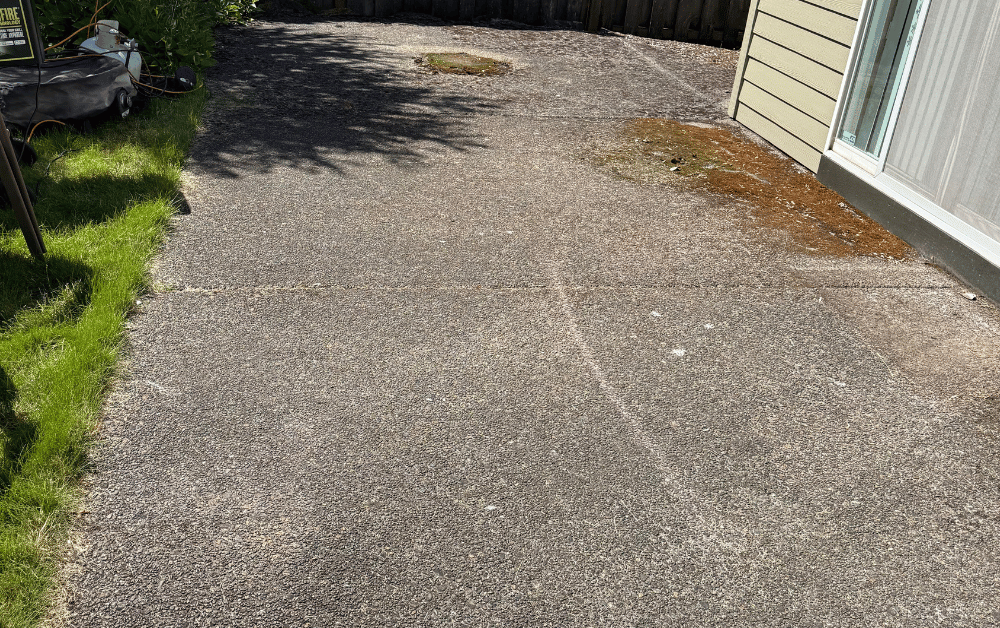
Stained concrete is mostly cosmetic. Slippery concrete is a real hazard. Algae and moss create a film that becomes dangerously slick when wet, particularly on:
- Front steps and porches
- Pathways under trees
- Pool decks and patios
- Commercial entryways and ramps
This is not just a homeowner concern. The OSHA walking-working surfaces standard requires commercial properties to keep walking surfaces in safe condition and free of hazards that could cause slips and falls. For both homes and businesses, routine cleaning of high-traffic hardscape is part of basic liability management, especially during Oregon's long wet stretches.
What Cleaning Actually Accomplishes
A proper concrete or paver cleaning does more than improve the look. Done right, it:
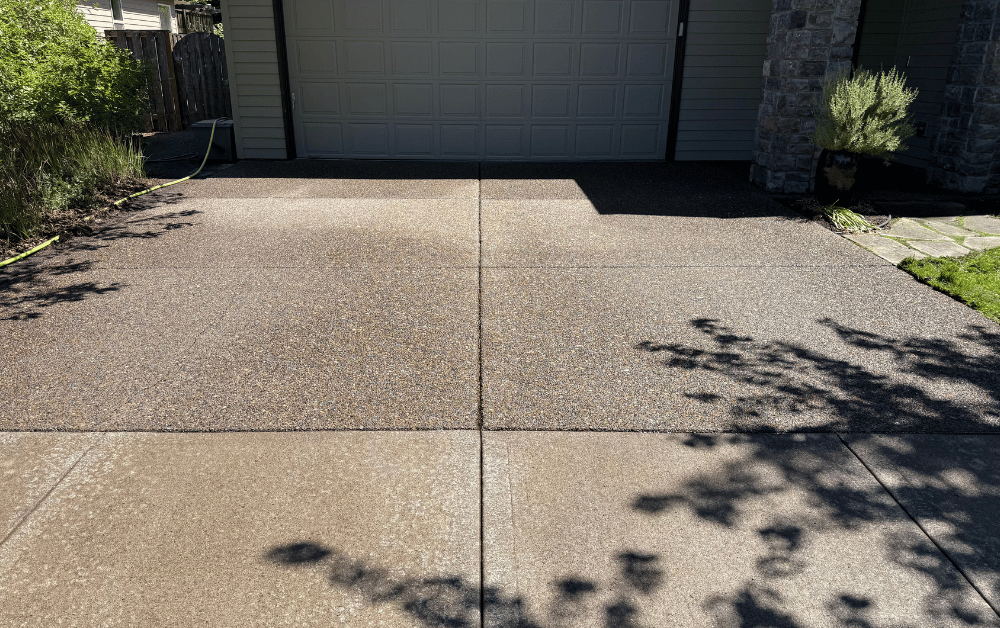
- Restores original color. Concrete that looked permanently grey often comes back lighter and brighter once years of biological film are removed.
- Removes slip hazards. Killing and rinsing away algae and moss reduces the risk of falls.
- Reveals damage. Cracks, sunken sections, and surface wear often hide under buildup. Cleaning lets you see what needs repair.
- Extends the life of the surface. Biological growth keeps concrete and pavers damp longer than they should be, which contributes to spalling, joint erosion, and freeze-thaw damage.
- Sets up sealing. Sealing a driveway or patio only works on a clean surface. Cleaning is step one of any sealing project.
For homeowners thinking about resale, this is one of the highest-impact, lowest-cost improvements available. Our article on whether cleaning your home's exterior is a smart move before appraisal covers the value side in more detail.
Different Surfaces, Different Methods
Not all hardscape responds to the same approach. A few rules of thumb:
Plain concrete driveways. Generally durable and can handle controlled pressure paired with a flat surface cleaner attachment. A surface cleaner produces even results and avoids the striped, wand-track pattern that aggressive operators leave behind.
Stamped or decorative concrete. Needs lower pressure and more care. Aggressive cleaning can dull the finish, erode the color layer, or damage sealer.
Pavers. Require careful pressure to avoid blasting out the joint sand. After a thorough cleaning, joint sand usually needs to be replaced and re-stabilized to keep weeds and moss from returning.
Brick. Older or soft brick can crumble under high pressure. The right approach is gentler than most homeowners expect.
Natural stone. Varies significantly by type. Some stones tolerate pressure well; others etch or pit. Test a small area first or rely on a professional who has worked with the specific material.
Porches and front steps. Often a mix of materials and finishes. These benefit from a softer approach since they are high-visibility and often near painted siding, screens, and landscaping that should not be sprayed with high pressure.
The general principle: more pressure is not better. The right combination of pressure, cleaning solution, and technique produces a cleaner result with less risk of damage.
Where DIY Cleaning Goes Wrong
Renting a pressure washer is tempting, and for some jobs it works fine. The most common mistakes that cause damage:
- Holding the tip too close. Concentrated pressure at close range etches concrete, leaving permanent stripes or rings.
- Using a zero-degree tip. Aggressive tips meant for very specific tasks can cut into softer surfaces.
- Skipping cleaning solution. Pressure alone struggles with biological growth. The solution kills the moss and algae at the root; the rinse just carries it away.
- Pushing dirty water into the wrong places. Runoff carrying cleaning chemicals can damage plants, stain siding, or violate stormwater rules.
- Forgetting about runoff regulations. EPA stormwater guidance treats anything that enters storm drains as a potential pollutant, including soapy or chemical-laden wash water. Professional cleaners plan for containment and proper disposal.
The cost of repairing etched concrete or replacing damaged plants usually exceeds the cost of hiring someone who does this for a living. For more on the trade-offs, our breakdown of professional house washing versus DIY covers the same calculus on the vertical side of the home.
How Often to Clean Hardscape in Hillsboro
The right schedule depends on conditions:
- Sunny, exposed driveways: Every 2 to 3 years for a thorough cleaning.
- Shaded walkways and entryways: Annually, often in spring after the wet season has done its damage.
- Pool decks and patios: Annually before peak use season.
- Commercial entries and storefronts: Often quarterly or semiannually depending on traffic.
- Properties under heavy tree cover: May need attention twice a year, especially after fall leaf drop.
Spot cleaning of stains or oil drips can happen any time and does not require a full-property service.
What to Look for in a Cleaning Contractor
A few questions worth asking before hiring:
- Do they use a surface cleaner attachment for flat concrete? This matters for even results.
- Do they pre-treat with appropriate cleaning solutions, or rely on pressure alone?
- Are they insured? Hardscape cleaning involves chemicals, water volume, and equipment that can damage adjacent property.
- Will they protect plants and landscaping during the work?
- Do they offer sealing, or recommend a timeline for it after cleaning?
Pricing should reflect square footage, condition, and access, not just an hourly rate. A bid that is dramatically lower than others often means the crew is planning to move fast and skip steps.
When to Pair Cleaning with Other Work
Hardscape cleaning is often part of a larger project rather than a standalone job. Common pairings:
- Cleaning the driveway and walkways the same week the house is washed
- Cleaning the patio before sealing concrete or staining a deck
- Cleaning before installing new landscaping so dirty runoff does not stain new mulch or stone
- Cleaning all hard surfaces before painting trim or replacing the front door
- Coordinating with gutter cleaning to prevent basement leaks, since downspout discharge often stains the concrete it lands on
Scheduling work in the right order avoids cleaning the same surface twice and gets the best overall result.
About Worth It Exterior Cleaning
Worth It Exterior Cleaning is a locally owned company based in Hillsboro, serving homeowners and small commercial property owners across western Washington County. The team uses surface-appropriate methods for concrete, pavers, brick, and other hardscape, with the goal of restoring the surface without damaging it or surrounding landscaping.
Service areas include Hillsboro, Tanasbourne, Orenco, Aloha, Beaverton, Forest Grove, Cornelius, and the surrounding west Portland metro communities.
Contact Information
Worth It Exterior Cleaning 9620 Northeast Tanasbourne Drive Ste 300, Hillsboro, OR 97124 Phone: 503-941-0862 Email: info@worthitexterior.com
Request your free quote or give us a call directly.
Frequently Asked Questions
Will cleaning damage my concrete? Not when it is done correctly. Concrete is generally durable, but careless technique, the wrong tip, or holding the wand too close can etch the surface permanently. A surface cleaner attachment and the right pressure setting produce even, safe results.
Can stained concrete really come back to its original color? In most cases, yes. Years of biological film, dirt, and rust often hide the original concrete, and the difference after cleaning can be dramatic. Severe stains from oil, paint, or rust may need targeted treatment in addition to general cleaning.
Should I seal my driveway or patio after cleaning? Sealing extends the life of the cleaning and protects against future staining and moisture damage. The surface needs to be fully clean and dry first, which usually means waiting a day or two between cleaning and sealing.
Why do pavers grow weeds between the stones after cleaning? Cleaning often removes the polymeric sand that fills paver joints. Without joint sand, water, weed seeds, and moss find easy footing. Replacing and stabilizing the joint sand after cleaning is what keeps pavers looking right long term.
What about salt and ice melt damage in winter? Rock salt and many ice melt products can pit and discolor concrete over time. Cleaning in spring removes residue before it does more damage. A sealed surface holds up better against these chemicals.
Can I clean my own driveway with a garden hose pressure attachment? A garden hose attachment will rinse off loose dirt but lacks the pressure and flow to remove embedded buildup, algae, or moss. For real results, you need either a true pressure washer with proper technique or a professional service.
Is there a best time of year to clean hardscape in Hillsboro? Late spring through early fall is ideal. Surfaces dry quickly, sealing is possible if needed, and the work gets ahead of the wet season's worst buildup. Cleaning is still possible in colder months when weather allows, especially for slippery walkways that become safety issues.
Does cleaning runoff harm plants and lawns? It can, depending on the cleaning solution used and how runoff is managed. Professional crews pre-wet plants, choose solutions appropriately, and direct or contain runoff. DIY cleaning with store-bought products is the more common source of plant damage, since many homeowners do not realize how concentrated those cleaners can be.