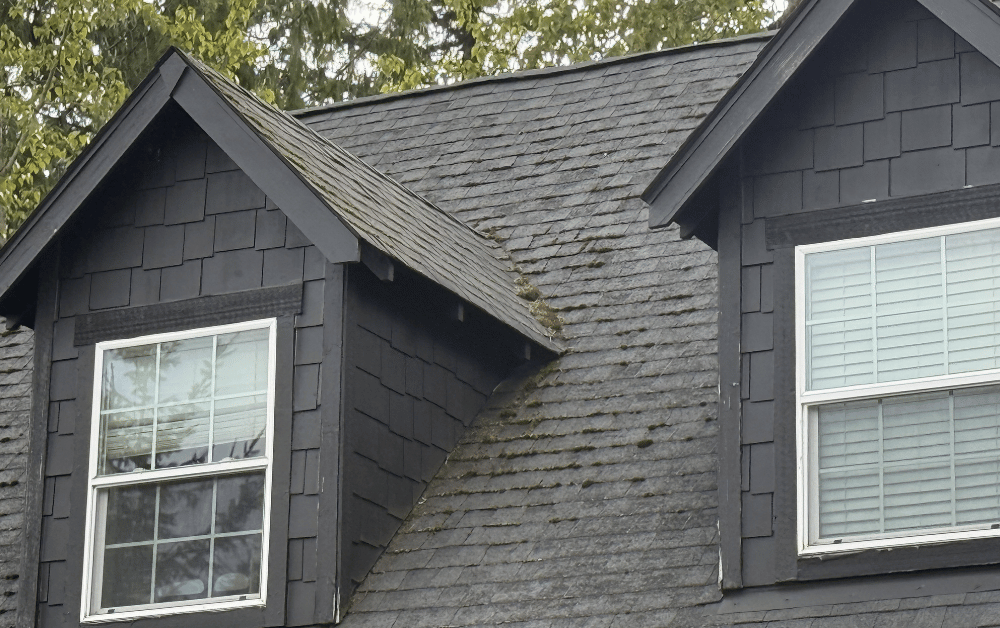
Every roof in Hillsboro exists in a microclimate defined by the trees around it, the direction it faces, and the amount of direct sunlight it receives throughout the year. Two homes on the same street can age at completely different rates based on nothing more than where a row of Douglas firs sits relative to the roofline.
Homeowners in the west Portland metro are living in one of the best possible environments for biological roof growth and one of the hardest environments for keeping roofs dry. Understanding how shade, rainfall, and tree proximity actually affect roofing materials helps homeowners make better decisions about cleaning schedules, gutter maintenance, tree management, and long-term roof care.
How Shade Changes the Game
Sunlight is the primary natural defense against moss, algae, and lichen on a roof. UV radiation dries surfaces quickly after rain, inhibits biological growth, and keeps the roof deck temperature high enough to slow the establishment of new organisms. When shade removes that defense, the dynamics shift significantly.
Shaded roof sections stay wet longer. A south-facing slope with full sun exposure may dry within hours of a rain event. A north-facing slope under a tree canopy can stay damp for days. That extended moisture contact is the single most important factor in biological growth on roofing materials.
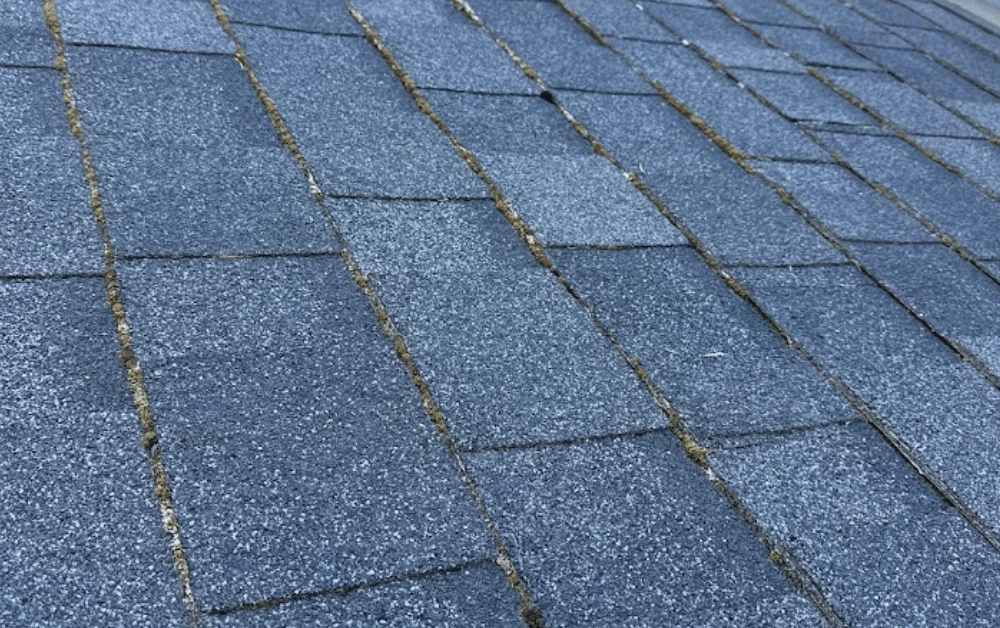
Moss establishes faster in shade. Moss spores are everywhere, but they germinate and grow only when moisture persists long enough for them to take hold. A shaded section of roof provides that window. An adjacent sunlit section does not. This is why moss patterns on many Hillsboro roofs follow the shade line precisely.
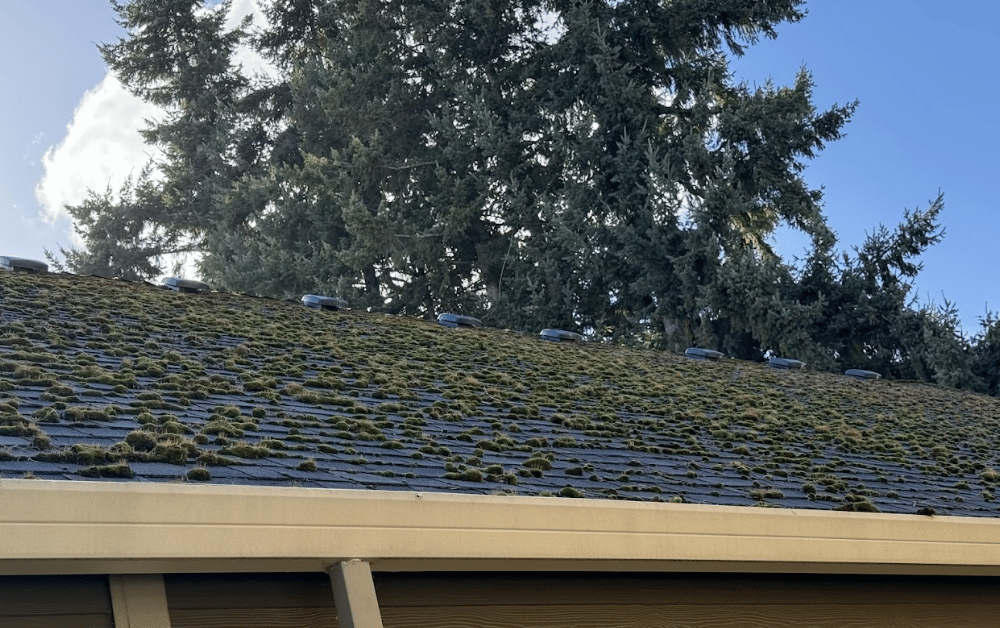
Algae thrives on north and west-facing elevations. Gloeocapsa magma, the organism responsible for black algae streaks on roofs, grows most aggressively on surfaces that receive the least direct sun. North-facing slopes and any section shaded by a structure, dormer, or tree are the first to show streaking.
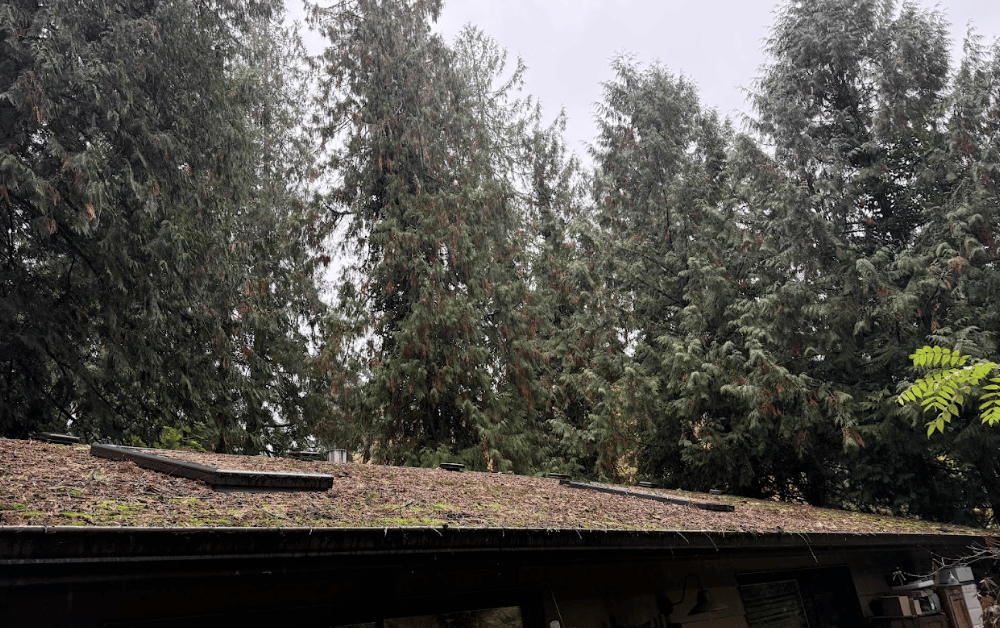
Shaded roofs accumulate debris faster. Branches that overhang the roof drop needles, leaves, seeds, and small branches directly onto the surface. Without sun to dry and loosen this material, it sits longer, decomposes in place, and creates a moisture-trapping layer that feeds the moss and algae beneath it.
The practical takeaway: a shaded roof in Hillsboro ages faster, accumulates growth faster, and needs more frequent maintenance than an exposed one. If your home sits under or beside mature trees, your roof's maintenance schedule should reflect that, not the schedule your neighbor with a sunny lot follows.
What Rain Does Beyond Getting Things Wet
Rainfall in the Portland metro is not extreme in volume, but it is remarkably persistent. According to NOAA climate data for Portland, the area averages over 150 days of measurable precipitation per year. That consistency matters more than total inches because it means surfaces rarely get the extended dry periods that naturally suppress biological growth.
Persistent moisture feeds growth cycles. Moss and algae do not need heavy rain to grow. They need consistent moisture. Light, frequent rain events are actually more favorable for biological establishment than occasional heavy downpours, because the surface never fully dries between events.
Rain carries spores and nutrients. Rainwater picks up moss spores, algae cells, pollen, and organic particles as it runs across surfaces and deposits them in valleys, along ridges, and against flashing where moisture pools.
Rain tests drainage constantly. Gutters, downspouts, valleys, and flashing are under continuous stress during the wet season. Minor gutter clogs that would cause no issues with infrequent rainfall become persistent overflow problems when it rains three or four days a week for months.
Moisture penetration accumulates. Each rain event pushes small amounts of moisture into shingle pores, under lifted edges, and into any gap in the flashing system. Over weeks and months, this cumulative moisture exposure degrades materials faster than the same total rainfall delivered in fewer, heavier events.
How Trees Compound the Problem
Trees provide shade (reducing drying) and drop debris (feeding growth and clogging gutters) simultaneously. The combination is more damaging than either factor alone.
Needles and leaves in valleys and gutters. Roof valleys are natural collection points for anything that falls onto the roof. In a home surrounded by Douglas firs, valleys can fill with needles within weeks of cleaning. Maple leaves settle flat across shingles and decompose in place. Both create debris dams that hold moisture against the roof surface. Our article on how annual gutter cleaning prevents basement leaks covers the downstream consequences when this debris reaches the gutters.
Sap and organic residue. Conifer sap is sticky and acidic. When it lands on shingles, it bonds to the surface and creates a site where moisture, spores, and debris adhere more readily. Sap staining also darkens the roof in patterns that mimic algae growth.
Branch contact and abrasion. Branches that touch or overhang the roof rub against shingles in wind, loosening granules and creating entry points for moisture. Even light branch contact over time produces visible wear lines on the shingle surface.
Reduced air circulation. Dense tree canopy reduces air movement across the roof, which slows evaporation and keeps the surface damp longer. A roof surrounded by trees on all sides with no gap in the canopy can stay wet indefinitely during the wet season.
Wildlife pathways. Squirrels, raccoons, and birds use overhanging branches as access to the roof. Their traffic creates wear paths, loosens debris, and can damage vents and pipe boots.
What Homeowners Can Do
The relationship between shade, rain, trees, and roof condition is not something you can eliminate, but it can be managed:
Trim branches back from the roofline. The International Association of Certified Home Inspectors recommends maintaining at least six to ten feet of clearance between tree branches and the roof surface. Trimming reduces debris, increases air circulation, and allows more sunlight to reach the shingles. This single step has more impact on moss growth than any cleaning product.
Clean gutters on a schedule that matches your tree exposure. A home under heavy tree cover may need gutter cleaning two to four times per year. A home with minimal tree exposure may need it once. The schedule should reflect the actual conditions, not a generic annual recommendation.
Schedule roof treatment proactively. Waiting until moss is thick and established makes cleaning more involved, more expensive, and riskier for the shingles. Treating when growth is light produces better results and causes less surface disruption. Our article on the ultimate soft wash guide for roof cleaning in Hillsboro covers timing and method in detail.
Consider zinc or copper ridge strips. Metal strips installed along the ridge release trace amounts of zinc or copper in rainwater, which inhibits moss and algae growth below the strip. They are a preventive tool, not a cure, but they can extend the interval between professional treatments significantly on a clean roof.
Inspect annually from the ground. You do not need to climb on the roof to monitor its condition. From the ground, look for visible moss clumps, dark streaking, debris accumulation in valleys, and gutter overflow during rain. Any of these is a signal that maintenance is due.
When Tree Removal Is Part of the Conversation
In some cases, the most effective long-term roof maintenance strategy involves removing or significantly pruning one or more trees. This is a larger decision with landscape, aesthetic, and sometimes regulatory considerations, but it is worth evaluating when:
- A single tree is responsible for the majority of debris and shade on the roof
- Repeated roof cleaning is needed annually because of one specific tree's impact
- Root growth from the tree is also affecting the foundation, driveway, or sewer lateral
- The tree is dead, diseased, or structurally compromised
An arborist can evaluate tree health and recommend pruning or removal options. In some cases, selective limbing rather than full removal is enough to change the shade and debris dynamics on the roof.
About Worth It Exterior Cleaning
Worth It Exterior Cleaning is a locally owned company based in Hillsboro, serving homeowners across western Washington County. The team evaluates shade, tree exposure, and drainage conditions as part of every roof cleaning assessment and recommends a maintenance schedule that matches the specific conditions of each property rather than applying a one-size-fits-all timeline.
Service areas include Hillsboro, Tanasbourne, Orenco, Aloha, Beaverton, Forest Grove, Cornelius, and the surrounding west Portland metro communities.
Contact Information
Worth It Exterior Cleaning 9620 Northeast Tanasbourne Drive Ste 300, Hillsboro, OR 97124 Phone: 503-941-0862 Email: info@worthitexterior.com
Request your free quote or give us a call directly.
Frequently Asked Questions
My neighbor's trees hang over my roof. What can I do? In Oregon, you generally have the right to trim branches that extend over your property line, up to the property boundary. You cannot trim the tree on the neighbor's side without permission. For significant tree work near utility lines or protected trees, consult a certified arborist and check local regulations before proceeding.
Does moss only grow on north-facing roofs? North-facing slopes are the most common location, but moss can grow on any section that is consistently shaded, even on south-facing slopes that are shaded by a tree, chimney, or neighboring structure. The determining factor is persistent moisture, not compass direction alone.
How much clearance should I maintain between trees and my roof? Six to ten feet of clearance between branches and the roof surface is a standard recommendation. This reduces debris, prevents branch abrasion, improves air circulation, and allows more drying sunlight to reach the shingles.
Can I just install zinc strips and skip the cleaning? Zinc strips inhibit new growth but do not remove existing moss or algae. Installing them on a roof that already has established growth will slow the spread but not resolve it. The most effective approach is a professional cleaning followed by zinc strip installation for ongoing prevention.
Will removing a tree eliminate my roof moss problem? Removing a tree that provides significant shade and debris can dramatically reduce the rate of moss growth. It may not eliminate it entirely if other shade sources remain, but it can change the maintenance frequency from annual to every two or three years.
How do I know if my roof problems are from trees or just age? Tree-related damage and buildup tend to concentrate in specific zones: under overhanging branches, in shaded sections, and in valleys where debris collects. Age-related wear tends to be more uniform across the roof. If the worst areas align with tree coverage, the trees are likely a major contributing factor.