Every Oregon homeowner with a shaded roof eventually stands in the yard, looks up at the moss, and weighs the same two options: handle it personally or pay someone to do it. Both paths have real trade-offs, and the right answer depends on the roof, the severity of the growth, the homeowner's comfort with height and equipment, and how long the results need to last.
This is not a sales pitch for professional cleaning disguised as a comparison. There are situations where a homeowner can manage moss effectively on their own, and there are situations where attempting it creates problems that cost more than the service would have. Knowing which situation you are in before you start is the point.
What DIY Moss Removal Actually Looks Like
The typical DIY approach involves some combination of the following:
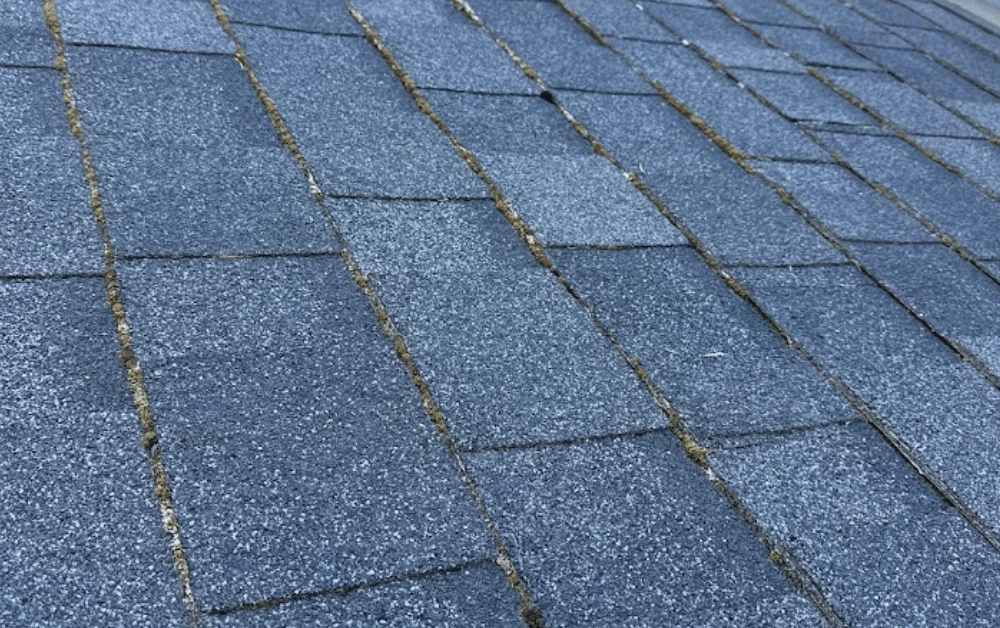
Manual removal. Climbing onto the roof with a stiff brush, plastic scraper, or leaf blower and physically removing visible moss. This works for light surface growth and is the gentlest option for the shingles when done carefully.
Zinc or copper strips. Installing metal strips along the roof ridge so that rainwater carries trace amounts of metal down the roof surface, inhibiting moss growth. This is a preventive measure rather than a cure. It slows regrowth but does not remove existing moss.
Store-bought moss killer. Granular or liquid products applied to the roof surface that kill moss over time. Most are zinc sulfate or iron-based. They work, but application technique and timing matter. Over-application or application before heavy rain can stain concrete and siding below, damage plants, and wash into storm drains.
Garden hose rinse. Spraying the roof with a garden hose after treatment to remove dead moss. This is safe for shingles but limited in its ability to remove anything firmly attached.
Each of these can work for light, early moss on a low-pitch roof that is safe to access. The problems start when the situation is more than light, early, or easily accessible.
Where DIY Runs Into Trouble
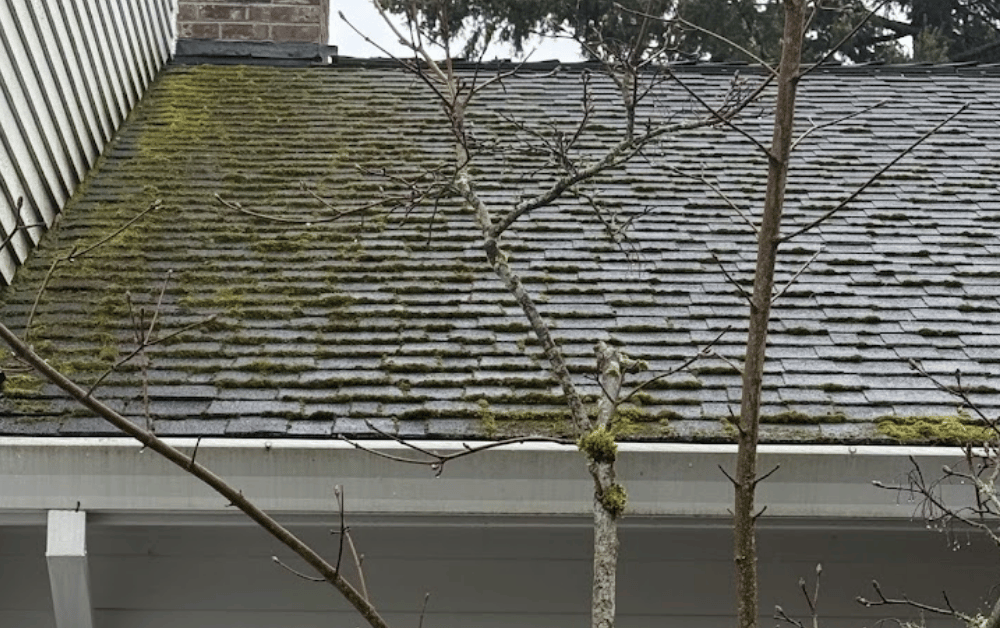
Safety. Roof work is inherently dangerous. A wet, mossy roof in Oregon is significantly more dangerous than a dry one. Falls from residential roofs are one of the leading causes of serious injury in home maintenance, and moss makes the surface unpredictable underfoot. The CDC's data on fall injuries consistently places ladder and roof falls among the most common preventable injuries for homeowners. No amount of money saved on a cleaning bill justifies a fall.
Shingle damage from aggressive removal. The instinct when scraping moss is to press harder when it resists. Pressing harder tears the granular surface of asphalt shingles, which is the layer that provides UV protection and waterproofing. Every granule lost is lifespan lost. Aggressive scraping on a roof that still has years of service left can shorten that service significantly.
Incomplete treatment. Manual removal takes off what is visible but leaves the root structure in the shingle surface. Without a chemical treatment that kills the biological growth at the root, regrowth starts almost immediately. Homeowners who scrape their roof clean in spring often see visible moss returning by fall.
Chemical misapplication. Store-bought moss killers work, but they are often applied too heavily, at the wrong time, or without accounting for runoff. Iron-based products stain concrete and masonry permanently. Zinc sulfate products can damage plants if they wash into beds. Applying before a heavy rain sends the product off the roof before it has time to work, wasting the application and creating runoff issues.
Inability to assess the roof. A homeowner focused on removing moss is not usually evaluating the condition of the shingles, flashing, valleys, and vents underneath. A professional who cleans roofs regularly can spot cracked shingles, lifted flashing, deteriorating pipe boots, and other issues that a homeowner would not recognize or know to look for.
What Professional Roof Cleaning Involves
A professional soft-wash roof cleaning is a fundamentally different process from what most homeowners attempt on their own. The core differences:
Method. Professional roof cleaning uses a soft-wash system that applies a cleaning solution at low pressure. The solution, typically a diluted sodium hypochlorite blend formulated for roof surfaces, kills moss, algae, and lichen on contact. The dead growth then dries out and weathers off naturally over the following weeks. No scraping, no brushing, no high-pressure blasting.
Equipment. Professional crews use ground-level or ladder-based application systems that minimize or eliminate the need to walk on the roof. This protects both the crew and the shingles. The cleaning solution is applied through a soft-wash pump system that delivers consistent coverage at pressures far below what would damage roofing materials.
Assessment. A professional cleaning includes a visual inspection of the roof before and during the work. Issues with shingles, flashing, vents, and valleys are identified and communicated to the homeowner. This does not replace a formal roof inspection by a licensed roofer, but it catches many issues early.
Plant protection. Professional crews pre-wet surrounding landscaping, apply cleaning solution carefully, and rinse all adjacent surfaces after the work is complete. This is standard practice, not an extra step.
Results. A professional soft-wash treatment kills biological growth at the root, which means regrowth is significantly slower than after manual removal alone. A properly treated roof in Hillsboro typically stays clear for one to three years depending on shade and tree exposure.
Our detailed walkthrough of how low-pressure roof washing works on asphalt shingles explains the full method and the reasons behind each step.
Cost Comparison: What Each Approach Actually Costs
DIY moss removal appears cheaper on the surface. The real comparison looks different:
DIY costs:
- Moss killer product: $15 to $40 per application
- Brush or scraper: $10 to $30
- Zinc strips (optional): $30 to $80
- Garden sprayer: $20 to $50
- Time: 3 to 6 hours for a typical roof
- Frequency: often needed annually because root systems survive
- Risk: potential shingle damage, plant damage, personal injury
Professional soft-wash costs:
- Full roof treatment on a typical Hillsboro home: varies by size, pitch, and severity
- Frequency: typically every 1 to 3 years
- Includes plant protection, assessment, and proper chemical handling
- No homeowner risk of falls or shingle damage
When DIY needs to be repeated annually and professional treatment lasts two to three times as long, the cost gap narrows significantly. When the risk of a fall or the cost of replacing shingles damaged by aggressive scraping is factored in, professional treatment is often less expensive over a five-year period.
When DIY Makes Sense
DIY moss management is reasonable in specific situations:
- Very light, early moss growth on a low-pitch roof that is safe to walk
- Preventive zinc strip installation on a clean roof
- Spot treatment of small areas accessible from a ladder without walking on the roof
- Annual application of granular moss killer on a roof already in good condition
If you can safely reach the area, the growth is light, and you understand the limitations of the products you are using, DIY maintenance between professional treatments is a practical approach.
When Professional Service Is the Right Call
Professional cleaning is the better choice when:
- Moss growth is thick, widespread, or has been building for multiple seasons
- The roof pitch or height makes walking on it unsafe
- The roof is older and shingles may be fragile
- Previous DIY attempts have not produced lasting results
- The home is being prepared for sale and the roof needs to photograph well
- The homeowner has never had the roof professionally assessed
Most Hillsboro homes with any significant tree cover fall into at least one of these categories.
The Manufacturer Perspective
Major asphalt shingle manufacturers, including Owens Corning, specify that roofs should be cleaned with low-pressure methods and appropriate cleaning solutions. Pressure washing and aggressive mechanical removal are explicitly not recommended. This matters because warranty claims can be denied if the manufacturer determines that improper maintenance contributed to the failure.
A professional cleaning company that follows manufacturer guidelines protects your warranty. A DIY approach that includes scraping, pressure washing, or aggressive treatment does not.
What Happens When Neither Is Done
The third option is doing nothing, and it is worth understanding what that path leads to. Moss left untreated on an Oregon roof continues to spread, hold moisture, lift shingle edges, and trap debris in valleys and gutters. Over several years, this accelerates the aging of the roof and can contribute to leaks, wood rot, and gutter failure. Our article on what happens when you ignore roof moss in Hillsboro covers the progression in detail.
The cost of a new roof is many times the cost of years of professional cleaning. Maintenance is always cheaper than replacement.
About Worth It Exterior Cleaning
Worth It Exterior Cleaning is a locally owned company based in Hillsboro, serving homeowners across western Washington County. The team uses manufacturer-approved soft-wash methods for all roof cleaning, with the goal of removing moss safely while preserving the roof's protective surface.
Service areas include Hillsboro, Tanasbourne, Orenco, Aloha, Beaverton, Forest Grove, Cornelius, and the surrounding west Portland metro communities.
Contact Information
Worth It Exterior Cleaning 9620 Northeast Tanasbourne Drive Ste 300, Hillsboro, OR 97124
Phone: 503-941-0862
Email: info@worthitexterior.com
Request your free quote or give us a call directly.
Frequently Asked Questions
Can I just scrape the moss off and skip the chemical treatment? You can remove what is visible, but without a chemical treatment that kills the root structure, regrowth begins almost immediately. Manual removal alone is a temporary cosmetic fix, not a lasting solution.
Is the cleaning solution safe for pets and children? Professional cleaning solutions are applied to the roof surface and rinsed thoroughly. Once the application has been rinsed and surfaces have dried, the treated area is safe. Pets and children should be kept away from the work area during application and rinsing. Ask your contractor about specific drying times.
How do I know if my roof is too far gone for cleaning? Curling, cracked, or missing shingles, large areas of bare granule loss, active leaks, and sagging sections are signs the roof may need replacement rather than cleaning. A professional cleaning company should tell you honestly when this is the case.
Will zinc strips prevent all future moss growth? Zinc strips slow regrowth significantly but do not eliminate it entirely, especially on heavily shaded roofs. They work best as a maintenance tool after a professional cleaning has removed existing growth.
Can I pressure wash my roof if I use a low setting? No. Even reduced pressure from a standard pressure washer exceeds what asphalt shingles can tolerate. The risk of granule loss, water intrusion under shingles, and warranty voiding is real at any pressure setting from consumer pressure washing equipment. Soft washing uses a fundamentally different delivery system designed for roofing materials.