Most homeowners do not look at their roof on purpose. It sits above the daily line of sight, and unless something leaks, it is easy to forget about entirely. In Hillsboro, that inattention creates a slow-moving problem: biological growth and debris accumulate over months and years while the homeowner notices nothing. Then a neighbor mentions the moss, or a real estate agent suggests cleaning before listing, or an inspector flags the roof condition during a refinance, and the homeowner realizes the situation is well past the light-maintenance stage.
Knowing what to look for from the ground, without climbing, can help you catch roof issues early when they are simpler and cheaper to address. Here are the signs that your Hillsboro roof needs professional attention, what each one means, and how urgently each should be handled.
Dark Streaks Running Down the Roof
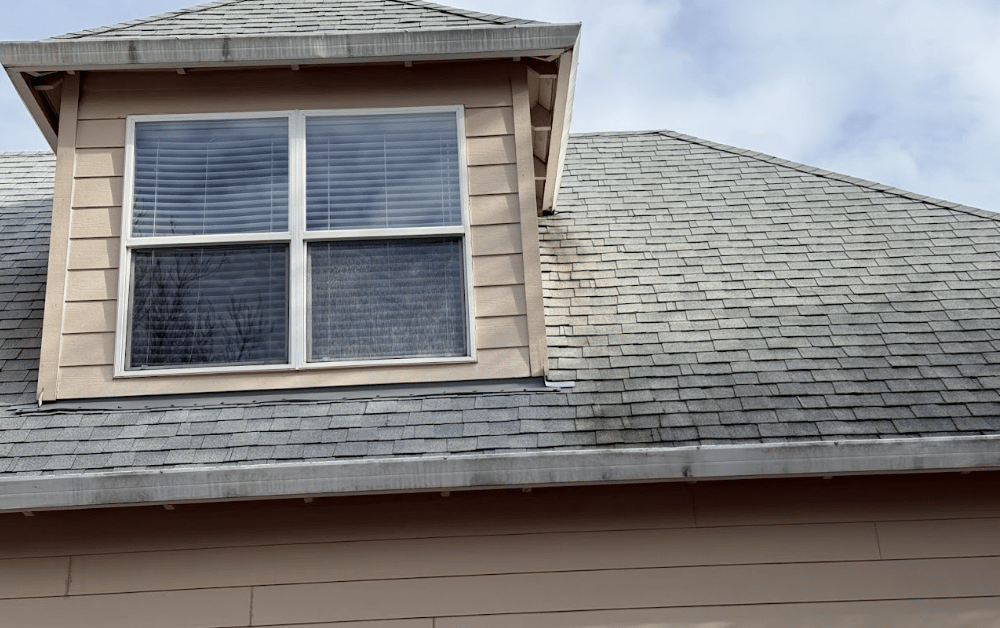
Black or dark brown streaks running vertically down the roof surface, especially on north-facing slopes, are caused by Gloeocapsa magma, a type of blue-green algae that feeds on the limestone filler in asphalt shingles. This is the most common roof staining in the Pacific Northwest and one of the most frequently misidentified.
What it is not: dirt, tree sap, or smoke staining. Algae streaking has a characteristic drip pattern that follows the path of rainwater down the roof surface.
What it means: the shingles are biologically colonized, not just dirty. The algae is a living organism that holds moisture against the shingle surface. Left untreated, it spreads across more of the roof with each wet season and contributes to premature granule degradation.
Urgency: moderate. Algae streaking is progressive, not emergency-level, but it gets harder and more expensive to treat the longer it sits. Early treatment produces better results and is gentler on the shingles.
Visible Moss Growth
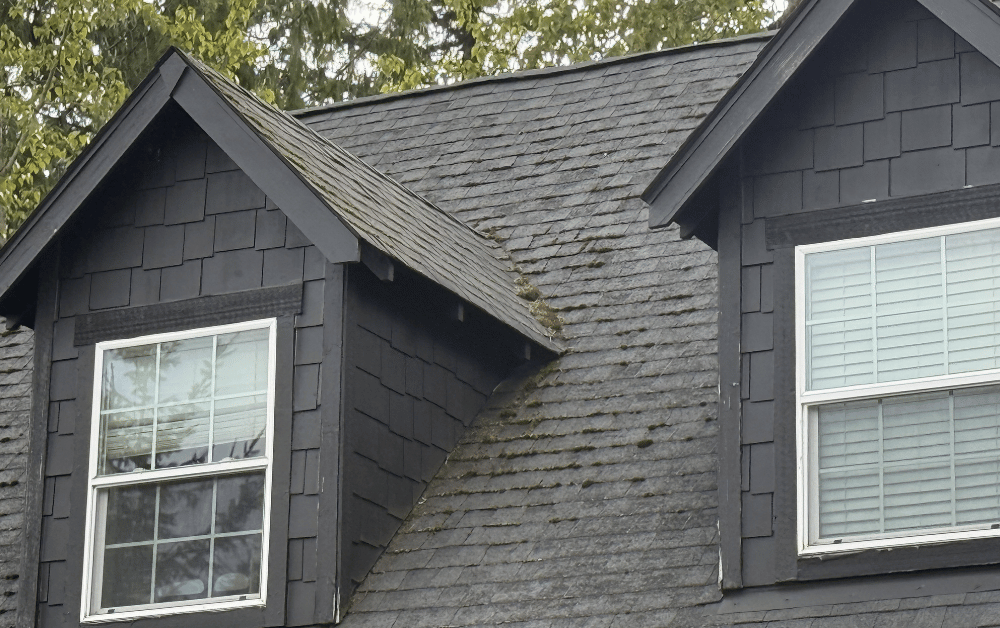
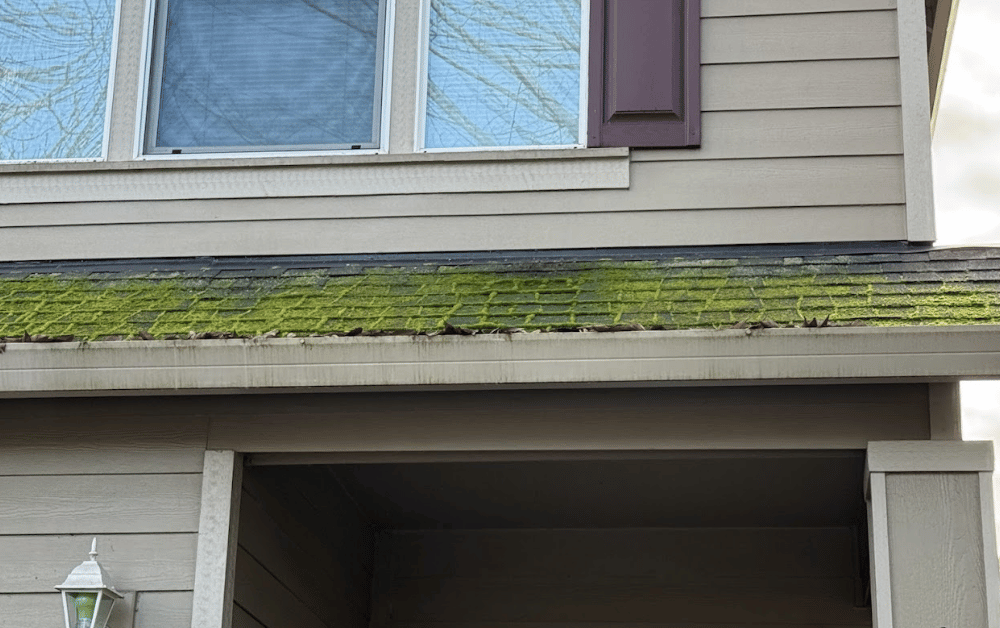
Thick, green, three-dimensional growth on the shingle surface is moss. It is different from algae in that it builds up above the surface rather than just discoloring it. Moss holds significant moisture against the roof and can lift shingle edges as it grows thicker.
Where to look: ridgelines, valleys, north-facing slopes, and any section shaded by trees, dormers, or neighboring structures. Moss follows shade and moisture, so the heaviest growth is almost always on the least sunlit parts of the roof.
What it means: the roof is in a condition where moisture persists long enough for moss to establish and grow. This is a maintenance issue that becomes a structural concern if left untreated for multiple seasons.
Urgency: moderate to high, depending on thickness. Thin, early moss responds easily to soft-wash treatment. Heavy, established moss requires more careful treatment and carries a higher risk of revealing shingle damage underneath. Our article on the ultimate soft wash guide for roof cleaning covers the treatment process for both stages.
Lichen Patches
Lichen appears as crusty, grey, pale green, or yellow patches that grip the shingle surface tightly. It is a composite organism made up of algae and fungi growing together, and it bonds to the shingle more aggressively than either moss or algae alone.
What it means: lichen indicates long-term biological colonization. It does not appear overnight; it develops over years on surfaces that have been biologically active for extended periods. Its presence usually means the roof has needed attention for some time.
Urgency: moderate. Lichen is harder to remove than moss or algae and may leave marks on the shingle surface even after treatment. Early treatment produces better results.
Gutter Overflow or Visible Debris in Gutters
If gutters overflow during moderate rain, or if you can see debris, plant growth, or standing water from the ground, the gutters are compromised. In Hillsboro, this is often connected to roof condition because roof debris is the primary source of gutter buildup.
What it means: debris from the roof (moss clumps, needles, leaves, granules) is accumulating in the gutters faster than the drainage system can handle. This is both a roof issue and a drainage issue.
Urgency: high during the wet season. Overflowing gutters direct water behind fascia, into wall cavities, and against the foundation. Our article on how gutter cleaning prevents basement leaks covers the downstream consequences.
Granules in the Gutters or at Downspout Outlets
Finding coarse, sand-like granules in the gutters or pooled at the base of downspouts is a sign of granule loss from the shingles above. Some granule loss is normal in the first year or two of a new roof. Ongoing or heavy granule accumulation on an older roof indicates accelerated wear.
What it means: the shingles are losing their protective coating. This can be caused by age, foot traffic, hail damage, or in some cases, previous pressure washing. It is worth noting because granule loss determines how much effective life the shingles have left.
Urgency: depends on quantity and age. Light granule accumulation on a roof under ten years old is usually normal. Heavy accumulation, especially on an older roof, warrants a professional evaluation to determine whether the roof is approaching the end of its service life.
Debris Accumulation in Valleys and Along Ridges
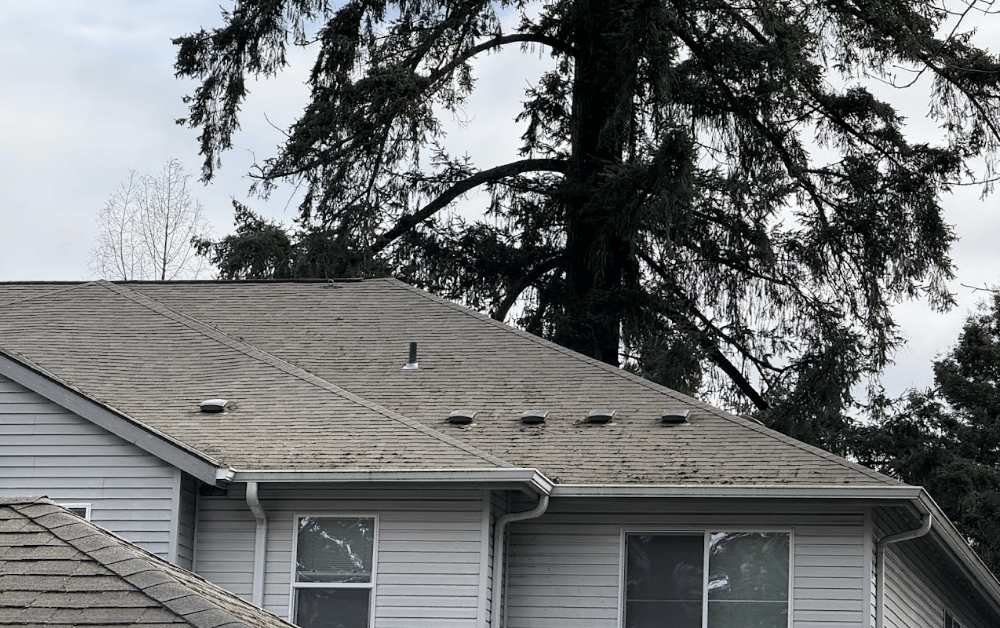
Roof valleys are natural collection points for anything that falls onto the roof. Needles, leaves, twigs, and moss clumps settle in valleys and stay there, holding moisture against the shingle surface. Debris along ridges and around pipe boots or vents creates similar moisture traps.
What it means: the debris is creating conditions for accelerated biological growth and moisture penetration in the most vulnerable areas of the roof. Valleys and ridges are where leaks most commonly originate.
Urgency: moderate to high. Clearing debris from valleys is straightforward maintenance, but it is often the first step in a professional roof cleaning that also treats the biological growth underneath.
Staining Below the Roofline on Siding or Fascia
Dark streaks or green growth on the siding immediately below the roofline, or on the fascia and soffit boards, usually originates from the roof. Water carrying algae, moss spores, and dissolved organic material drips off the roof edge and stains the surfaces below.
What it means: the roof is shedding biological material onto the building. This is a sign that the roof itself has significant growth, and it also means the siding and trim will need cleaning after the roof is treated.
Urgency: moderate. This is an aesthetic issue that also signals a roof maintenance need. Cleaning the siding without treating the roof source means the staining returns.
The Roof Looks Noticeably Different from Neighboring Homes
This is a less technical indicator but a useful one. If your roof is visibly darker, greener, or more discolored than comparable homes in the neighborhood, the difference is probably biological growth. Homes on the same street experience similar weather, so differences in roof appearance usually reflect differences in shade exposure, tree cover, or maintenance history.
What it means: the roof is overdue for maintenance relative to the conditions it is experiencing.
When to Act
The best time to address roof cleaning is before the growth becomes heavy. Light moss and early algae streaking respond quickly to soft-wash treatment, the process is gentler on the shingles, and the results last longer. Waiting until growth is thick, established, and embedded makes the job more involved, increases the risk of finding hidden damage, and reduces how long the treatment holds.
In Hillsboro, the practical window for roof treatment is late spring through early fall. Scheduling during this window gives the treatment time to work and the roof time to weather off dead growth before the next wet season begins.
If you recognize two or more of the signs above on your own roof, a professional evaluation is the right next step. Most reputable companies offer free assessments and can tell you whether cleaning makes sense or whether the roof's condition warrants a conversation with a roofer instead.
About Worth It Exterior Cleaning
Worth It Exterior Cleaning is a locally owned company based in Hillsboro, serving homeowners across western Washington County. The team begins every roof cleaning engagement with a condition assessment and provides honest recommendations about whether cleaning is the right investment for the specific roof. If a roof needs more than cleaning, you will hear that directly.
Service areas include Hillsboro, Tanasbourne, Orenco, Aloha, Beaverton, Forest Grove, Cornelius, and the surrounding west Portland metro communities.
Contact Information
Worth It Exterior Cleaning 9620 Northeast Tanasbourne Drive Ste 300, Hillsboro, OR 97124 Phone: 503-941-0862 Email: info@worthitexterior.com
Request your free quote or give us a call directly.
Frequently Asked Questions
Can I assess my roof without climbing on it? Yes, and you should. Most of the signs described in this article are visible from the ground, from a second-story window, or from across the street. Climbing onto a mossy roof is dangerous and unnecessary for assessment purposes. Binoculars help for closer evaluation.
I see dark streaks but no moss. Does the roof still need cleaning? Dark streaks are algae, which is a biological growth that will spread and worsen if left untreated. It is less visible than moss but contributes to the same moisture retention and granule degradation over time. Treating algae early is easier and less expensive than treating it after it has covered large sections of the roof.
How quickly does moss go from a small patch to a serious problem? In Hillsboro's climate, a small patch of moss can spread across a significant portion of a shaded roof section in one to two wet seasons. Growth is fastest on heavily shaded, north-facing slopes under trees. Catching it early is significantly easier and cheaper than treating established growth.
My roof was cleaned two years ago and the moss is already coming back. Is that normal? On heavily shaded roofs with significant tree cover, regrowth within two years is common. Trimming overhanging branches, installing zinc strips, and keeping gutters clear can all extend the interval between treatments. If regrowth is consistently rapid, the shade and moisture conditions on the roof may warrant more frequent maintenance.
Should I clean the roof before selling my home? Almost always yes. The roof is one of the largest visible surfaces in listing photos and one of the first things buyers evaluate. A clean roof changes the buyer's perception from "what will this cost to replace" to "this home is well maintained." Our article on the ultimate soft wash guide covers the full process and what to expect.
What if the cleaning company says the roof needs replacement instead? A company that recommends against its own service in favor of your best interest is telling you something valuable. If shingles are curling, cracked, missing granules in large patches, or the roof is past its rated lifespan, cleaning is not the right investment. Schedule a consultation with a licensed roofer for a second opinion.