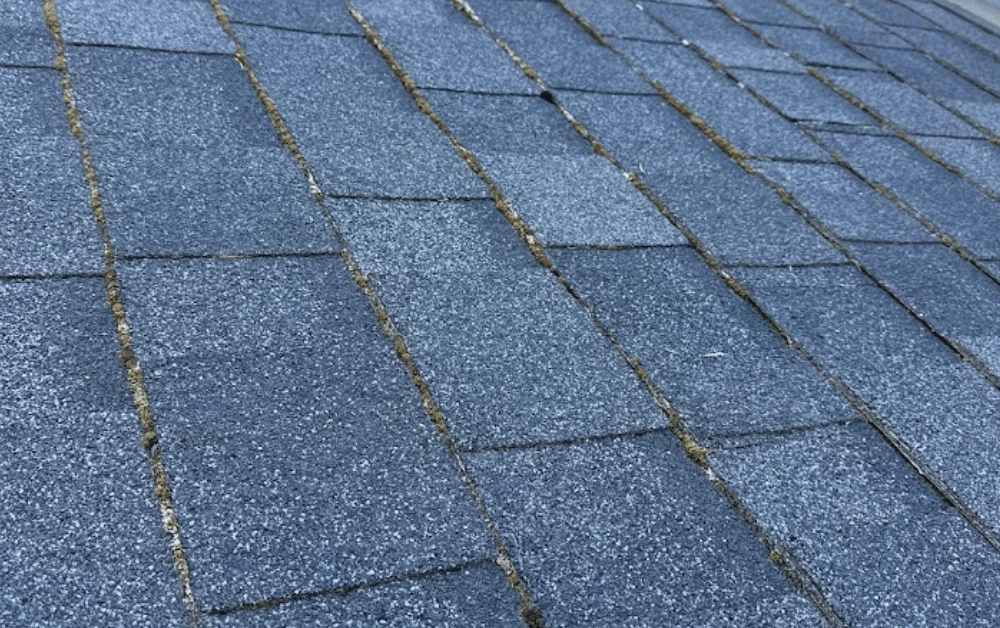
If you own a home with asphalt shingles and moss on the roof, someone has probably suggested pressure washing it. The logic seems straightforward: high-pressure water removes moss from concrete driveways, so it should work the same way on a roof.
It does not. Pressure washing is one of the most damaging things you can do to an asphalt shingle roof. It strips the granular coating that protects the shingle from UV radiation and water penetration, forces water under shingle edges, and can void the manufacturer warranty in a single pass. Every major shingle manufacturer specifies that asphalt roofs should never be cleaned with high-pressure equipment.
The correct method is soft washing: low-pressure application of a cleaning solution that kills biological growth chemically and allows it to weather off naturally without mechanical damage to the roof. This article explains how each method works, why the difference matters, and what soft washing actually does on a Hillsboro roof.
How Asphalt Shingles Are Designed
Understanding why soft washing works and pressure washing does not starts with how asphalt shingles are built.
An asphalt shingle is a layered product. The base is a fiberglass mat that provides structure. That mat is coated in asphalt, which provides waterproofing. On top of the asphalt layer sits a coating of ceramic-coated mineral granules. Those granules are the shingle's primary defense:
- They block UV radiation, which degrades the asphalt layer beneath
- They provide the visible color and texture of the roof
- They contribute to fire resistance ratings
- They add weight that helps shingles resist wind uplift
Every granule lost is protection lost. New shingles lose some granules during installation and the first few weathering cycles, which is normal. Accelerated granule loss from aggressive cleaning, foot traffic, or hail is not normal, and it directly shortens the shingle's functional lifespan.
What Pressure Washing Does to Shingles
A standard consumer pressure washer operates between 1,500 and 4,000 PSI. Even at the lower end, the focused force of a pressure washer at close range on an asphalt shingle does the following:
Strips granules. The water force dislodges granules from the asphalt surface. The damage is immediately visible as lighter-colored patches where the underlying asphalt is exposed. Once those granules are gone, they do not regenerate.
Cuts into the asphalt layer. At higher pressures or close range, the water jet can cut through the granule layer entirely and damage the asphalt coating beneath. This creates direct pathways for water to reach the fiberglass mat and the roof deck below.
Lifts shingle edges. Pressure directed at or under shingle edges separates the adhesive bond that holds overlapping courses together. Once lifted, shingle edges are vulnerable to wind damage and allow water to penetrate beneath the shingle.
Forces water into the roof system. High-pressure water driven against a shingle surface can push past the shingle layer, past the underlayment, and into the roof deck. This introduces moisture into a system designed to shed water downward, not resist lateral force.
Creates inconsistent results. Hand-held pressure washing on a roof produces uneven cleaning because the operator's distance from the surface varies constantly. This leaves a patchy, mottled appearance that can look worse than the original moss.
The damage from pressure washing a roof is cumulative and irreversible. You cannot replace lost granules. You can only replace the shingles.
How Soft Washing Works
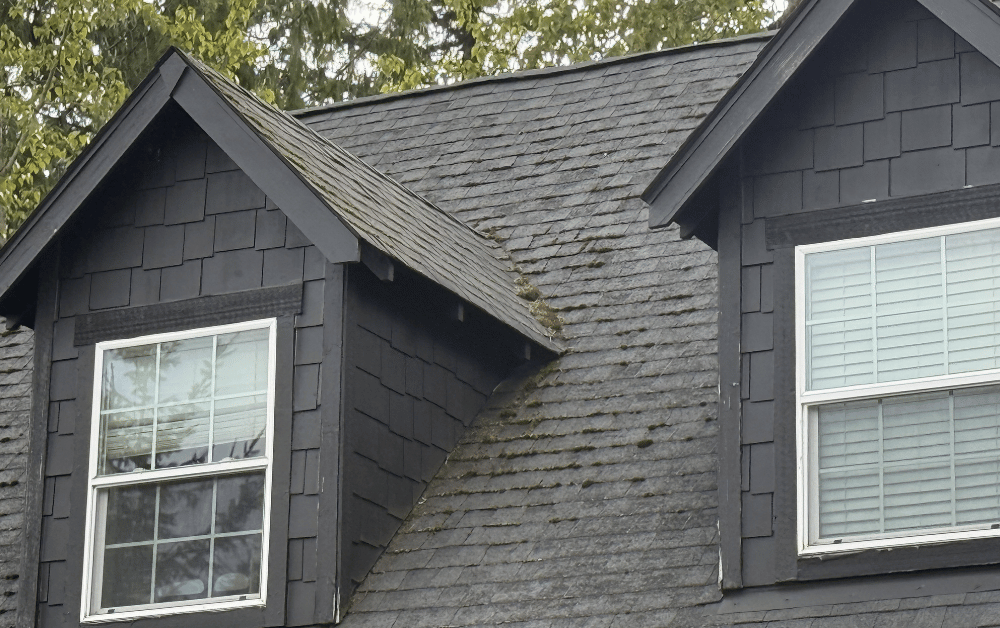
Soft washing addresses the same problem (biological growth on the roof) through an entirely different mechanism:
Application. A cleaning solution, typically a diluted sodium hypochlorite blend formulated for roofing, is applied to the roof surface using a soft-wash pump system. The delivery pressure is a fraction of what a pressure washer produces, typically around 60 to 100 PSI at the nozzle. This is comparable to a garden hose, not a pressure washer.
Chemical action. The cleaning solution kills moss, algae, and lichen on contact. It penetrates the root structure of moss growing in and under shingle surfaces, killing it at the base rather than just removing the visible portion.
Dwell time. The solution is allowed to sit on the surface for a period that allows it to fully work. This is different from pressure washing, where the water hits and leaves immediately. The dwell time is what makes the treatment effective against established biological growth.
Rinse. After adequate dwell time, the surface is rinsed with low-pressure water. The rinse carries away the cleaning solution and the loosened biological material without disturbing the shingle surface.
Weathering. Dead moss and algae do not always detach immediately. Over the following two to six weeks, dead growth dries out, loses its grip on the surface, and falls away naturally with wind and rain. This gradual process is gentler on the shingles than any form of immediate removal.
The result is a roof that becomes progressively cleaner over weeks following treatment, with no granule loss, no shingle damage, and no voided warranty.
What Manufacturers Actually Say
This is not a matter of opinion. Major shingle manufacturers have published positions on roof cleaning methods:
Owens Corning specifies low-pressure cleaning with appropriate solutions and explicitly recommends against pressure washing. Similar guidance appears in maintenance documentation from CertainTeed, GAF, and IKO.
The Asphalt Roofing Manufacturers Association (ARMA) has published guidance supporting low-pressure chemical cleaning as the appropriate method for maintaining asphalt roofs.
These positions exist because the manufacturers understand how their products are constructed and what degrades them. Pressure washing degrades them. Soft washing does not.
This also has warranty implications. A warranty claim on a roof that shows evidence of pressure washing damage can be denied on the basis that improper maintenance contributed to the failure. A roof maintained with manufacturer-approved soft washing is protected.
Common Misconceptions About Soft Washing
"It's just watered-down bleach." The active chemistry is sodium hypochlorite based, but the formulation, concentration, and application method are specific to exterior cleaning. Professional solutions include surfactants that help the product adhere to the surface and maintain effectiveness during dwell time. Concentration is calibrated to kill biological growth without damaging the roofing material.
"If it's low pressure, it can't really clean anything." The cleaning solution does the work, not the pressure. This is counterintuitive for homeowners accustomed to thinking about cleaning as a force-based activity. On a roof, the chemistry kills the growth. The rinse just removes the residue.
"It must damage plants." It can, if the crew does not take proper precautions. Pre-wetting landscaping, controlling application, and rinsing plants after the work is complete are standard practices for professional soft-wash crews. Plant damage from soft washing is almost always the result of poor technique, not an inherent risk of the method.
"The results don't last." A properly applied soft-wash treatment on a Hillsboro roof typically produces one to three years of clear results. The variation depends on shade, tree cover, and drainage conditions. This is significantly longer than the results from manual scraping or spot treatment, which often last only a few months.
When a Roof Is Too Far Gone for Soft Washing
Soft washing is a maintenance method, not a repair method. It removes biological growth from roofing materials that are still functional. If the underlying shingles are at the end of their service life, cleaning preserves the appearance but does not extend the lifespan meaningfully.
Signs that a roof may need replacement rather than cleaning:
- Widespread curling or buckling of shingles
- Large patches of bare granule loss unrelated to cleaning damage
- Visible cracking or brittleness
- Active interior leaks
- Sagging or soft spots in the roof deck
- Shingles older than their rated lifespan
A reputable cleaning company should evaluate the roof condition before recommending treatment and tell you honestly if the roof is past the point where cleaning makes sense. Worth It Exterior Cleaning approaches every job this way: assessment first, recommendation second, work only when it is the right investment.
Our article on how to spot a safe roof cleaning company covers additional criteria for evaluating a company's approach before you commit.
About Worth It Exterior Cleaning
Worth It Exterior Cleaning is a locally owned company based in Hillsboro, serving homeowners across western Washington County. Every roof cleaning uses a soft-wash method that complies with manufacturer maintenance specifications. The team does not pressure wash roofs under any circumstances, and evaluates roof condition before recommending treatment.
Service areas include Hillsboro, Tanasbourne, Orenco, Aloha, Beaverton, Forest Grove, Cornelius, and the surrounding west Portland metro communities.
Contact Information
Worth It Exterior Cleaning 9620 Northeast Tanasbourne Drive Ste 300, Hillsboro, OR 97124 Phone: 503-941-0862 Email: info@worthitexterior.com
Request your free quote or give us a call directly.
Frequently Asked Questions
Can I tell if my roof has been pressure washed in the past? Often, yes. Pressure washing leaves visible signs: uneven granule wear, lighter patches where granules were stripped, and sometimes visible wand patterns on the shingle surface. These signs are visible from the ground on many roofs and become clear during a close inspection.
Is soft washing safe for tile and metal roofs? Yes, with adjustments to the cleaning solution concentration and application technique. Tile and metal are more durable than asphalt shingles, but they still benefit from chemical cleaning rather than high-pressure blasting, particularly to avoid damaging sealants, coatings, and fasteners.
How soon after soft washing will I see results? Initial results are visible within days as treated algae and mildew begin to fade. Moss takes longer because it weathers off gradually. Most homeowners see the full result within two to six weeks, depending on the severity of the growth and weather conditions during the weathering period.
Does rain after soft washing reduce the effectiveness? Light rain after the solution has had adequate dwell time does not reduce effectiveness. The solution works on contact, and once the biology is killed, rain actually helps carry dead growth off the surface. Heavy rain during or immediately after application can dilute the solution before it has time to work, which is why professional crews schedule around the forecast.
Can I apply a soft-wash solution myself? The chemistry is available to consumers, but safe application requires proper dilution knowledge, appropriate equipment, an understanding of rinse-off technique, and plant protection measures. Misapplication causes plant damage, surface staining, or ineffective treatment. Professional application is more consistent and eliminates the risk of DIY mistakes on one of the most expensive components of your home.